Topic Description: Interview of Peter Hayward, SUMH historian, History Project director and SUMH Alumni Awards Weekend events coordinator/organizer as conducted with himself. All other honorees have had a bio profile written and printed in the annual event program, except for Peter Hayward who unaware of his induction did not participate in an interview. Here is the chance to be introduced to him.
Interview with Peter W Hayward by Peter Hayward, September 2026
1 - Interviewee: - Peter White Hayward (PWH)
2 - Interviewer: Peter Hayward (PH)
INTRODUCTION
PWH: This is a bit unusual interview
PH: Well that seems apt considering who is being interviewed
PWH: What does that mean?
PH: Just that you are not the usual run of the mill SUMH alumnus
PWH: That is because I’m not an SU alumnus and I’ve never played hockey nor been associated with the team or it’s staff, my only connection has been as a parent.
PH: Well, that’s not exactly accurate, is it? You are a very recognized figure among the SUMH program from players and coaches to program staff and parents in connection with your contribution to how the program is perceived.
PWH: I’ve played my role.
PH: You’re not going to make this easy, are you?
PWH: Nope
PH: Okay, let’s start with a thumbnail sketch of how you are connected to the program and considered such an important figure to it….
PWH: (grimice, eyeroll)
PH: …then we’ll dive into your background like we have with all the other interviewees and honorees in the past.
PWH: Go for it!
PH: One reason for this interview is all the previous HOF and VWA honorees were interviewed and had a one-page program bio published in the Alumni Awards program of the year in which they were being honored. You managed to avoid that honor being you were surprised with your award. So, the time has come to level the playing field and let people know who you are and how you got here.
PWH: Well, that could be a long story with little relevance to my being honored by the SUMH program.
PH: Well, let’s dive in and well keep this as pertinent as possible.
PWH: Sure
BACKGROUND
PH: So where were you born and raised? What sports and activities did you do growing up?
PWH: I can’t claim that I ever grew up. I am from the Chicago area, Barrington Hills actually – a commuter community 40 miles northwest of the city, once good old Midwest farmland and horse country.
My father was a steel company executive with Ryerson Steel. My mother was the quintessential homemaker, community volunteer and compliment of my father.
I was a shy kid, primarily because of a pretty bad stutter. I entertained myself with crashing through the surrounding woods and fields, reading, watching every old movie on WGN and being active in sports – with a focus on golf, tennis, swimming, and later soccer. I also grew up playing small town little league baseball and learning to tie knots in scouts.
PH: Where did hockey fit in?
PWH: It didn’t! I never played hockey. I occasionally skated on the ponds near our house but it always such an effort to get to ice and I had weak ankles, so I never pursued the sport. Looking back the three of us kids were encouraged toward sports where we could go off on our own – golf, tennis, swimming – all sports we could pretty much do by ourselves or with others at the nearby club without parent supervision. Sports like hockey and horseback riding were deemed expensive and required too much time commitment by my folks, mainly my mother since my father was travelling a lot and arriving home after all the activities were over.
I will say we knew of hockey and reveled in watching the Chicago Black Hawks play on television – back when it was only the “original six” and we had players such as Bobby Hull, Stan Makita, Glen Hall and Tony Esposito. My mom was a big, big fan – when games were on no one got anything unless we “got it ourselves”. When it was the Cubs, White Sox, or Bears it didn’t matter, but the Hawks?! Don’t bother mom.
PH: Okay, you mentioned three kids, who else was in your family?
PWH: As I mentioned my mother and father, then there was my older brother Tom (12 years older), an older sister Wendy (7 years older). Then there is me the youngest, the brat of the family. Then there were all the dogs – my constant companions when my siblings were away at school.
PH: You mentioned soccer.
PWH: It was a sport I was first introduced to in the 8th grade P.E. class and took to when I went off to private school – where I started out playing winger and eventual dropped back to “middie” (mid field), then in college where I played club soccer, I played midfield and defensive back and the Center with roaming privileges as Captain of the Defense. After college I played mainly center defensive back. It was my one real team sport – though I played a bit of high school football and wrestled until it interfered with the soccer season. Tennis was my other go to sport in high school and during my recreation time as an adult – I always call it my Zen sport – I played singles but loved doubles and mostly preferred playing on clay courts.
PH: Where did you go to high school?
PWH: All up and down the East Coast – started out at a pre-prep in Exeter, NH called Emerson School, moved on to the Asheville School in North Carolina for a year, then bounced up to the Blue Ridge School in Dyke, VA where I graduated – along with a brief interlude at Florida Central School in Florida. Soccer and tennis were my two constant sports wherever I went.
PH: Where did you end up at college?
PWH: Drake University in Des Moines, Iowa, 300 miles due werst of Chicago, a five-hour drive legally and only three hours if possessed by the speed demon, good weather and the right car. Drake was my default school after not making it into Vanderbilt where I wanted to play soccer or Reed College in Walla Walla, Washington where I could pursue becoming a radical – I didn’t have the test scores (back when SATs mattered) to get into either. At Drake I created my own major – a combination of sociology, psychology, religion, philosophy and a smattering of other courses. I played club soccer, a sport just starting to grow at the collegiate level in the Midwest at the time, our league consisted primarily of Iowa schools and a few Illinois teams. We went from being the door mat at the bottom of the heap with Ames (University of Iowa) trouncing us to undefeated top dog for two years as we embarrassed Ames and the other big school programs.
PH: Is that where you developed your passion for club sports?
PWH: Not knowingly but obviously sat dormant there for many years until my son went to SU and played for their hockey team, which was and still is as of this moment a club team. SU brought back memories of all the ‘injustices” faced by club sports at big schools – little or no coverage in the campus newspaper, even when we are out performing the major school varsity sports, the lack of transportation, scrounging for practice sites, ragtag uniforms and totally student run and coached. What was the same was the love we all had for the game, the pride of playing for our university and the intense comradery we had while at school. SUMH showed how you could take that to a whole new level.
PH: Let’s diverge for a minute – what do you or did you do for work?
PWH: There is a simple answer and a more involved one – the simple on is I spent the majority of my professional life working in and with non-profit organizations -domestically and internationally – except for when I first finished college at which time I worked for the Ryerson Steel Co (my father’s former employer for 50 yrs) for a year more as a paid intern than anything else. During that time, I was assigned to the Personnel Department where I rotated as needed between EEO monitoring, OSHA Safety and corporate recruitment and training. At the time I didn’t think much of, but the experience in each severed my well throughout my professional and volunteer careers. After a year I felt like a round peg in a square whole unsuited for a lifetime career in the business world, that is when I quite on a whim and veered toward the non-profit world, first as a VISTA (like Peace Corps except focused inwardly on US needs) working in a communication action agency in Louisiana (CAA -anti-poverty npo), then as a full-time CAA community program planner and grant writer before taking a hiatus to attend graduate school (in Vermont). After grad school I veered again and spent a year leading high school summer and college semester abroad programs to Ireland, then spending three years there trying to break into the social services profession and doing fund raising before returning to the United States to take a position with my old graduate school as a career and employment specialist for seven years. Eventually I got married and worked overseas in the Philippines and Kenya with refugees and as a trainer of trainers as well as a Coordinator of the Museums of Kenya Know Kenya Course. Upon return to the states, I served as the director of a regional state school-to-work consortium, then took on an interim executive director position with an early education services agency, followed by a position in Concord, NH with a Northeastern States regional refugee resettlement program, from which I moved into consulting NPO boards and conducting board development and volunteer recruitment trainings. My non-profit work covered a wide range of organizations and fields including the arts, education, community services, and volunteer-oriented programs. There is a lot of small stuff I left out -like baker, factory worker, carpenter, none which I did very well or for very long.
PH: Wow!!
PWH: I’ve done a lot of different things, following where the opportunities took me.
PH: So how did you end up as the historian for the SU Men’s Hockey program?
PWH: I’ve always been one who finds interest in is around me and in some cases pursue that interest with a deep in-depth dive – it relates to my interest in always learning something new, and my attraction to history, working independently on projects that also involve others, plus a desire to do something for the community (be it organization, town or some other entity).
PH: So how did you get involved with being the historian of the SU Men’s Hockey program?
PWH: Well, there again is a simple, short answer and a longer more involved one.
PH: Let’s start with the simple one.
PWH: My son, Peter-Owen (Hayward) attended Syracuse University from 2016-2020, during that time he played on the SU Men’s Hockey team. The history project arose out of my wanting to make a significant gift to the team but didn’t particularly have the deep financial pockets, what I did have was time. The project came out of various conversations with some of the other parents, of both the older players and newer ones about the history of the team, how are team compared with past teams and how various players from various seasons compared to each other – the typical sports bar and in the stands talk. So, I decided to put together an almanac on the SUMH teams and players, and that would be my gift to the team. So, I started the project in January 2019t by speaking to Woli (Asst Coach Andrew Wolinski) about stats and past game sheets and by also posting a note on the FOSH Website (the SUMH alum website). I figured I’d have the project finished and distributed by ending of the school year in May of that year. I soon had that perception blown up and found myself involved in a more complex project. That is the short answer.
PH: And the longer answer?
PWH: And the rest of the answer is what I thought was going to be a quick and easy task covering maybe a decade of seasons ended up involving several decades of seasons going back to 1959 with extreme informational gaps requiring extensive research including interviews, newspaper scans and internet searches from which rose an understanding that after the original founders there had been other individuals who made significant contributions to keeping the program going when it was on the verge of disbanding. So I let the questions and areas of interest arising from the research guide me and the project direction. During the initial six-months the idea of an annual Hall of Fame recognition ceremony was raised and put into motion with the backing of Coach Treacy and Wolinski and assistance from Alumni Services. The history project developed into a two-headed beast – one involving the research of the history and the other the coordination of the annual Alumni Awards (Hall of Fame and Van Winkle Award). The latter helped feed into the first. The two rotated as to which took preference, based on the time of year, and have continued to do so for the past 8 years (2019-2026).
PH: The SUMH HOF Awards Weekend has grown and evolved over the past few years. Do you see future development of the weekend event?
PWH: It has grown and developed quite a bit, since the first year in 2019. It started out with 87 attendees including then current players and staff and has risen to188 this past year shooting for 200 this year (2026). The weekend has from the outset involved an on-ice pre-game recognition ceremony and puck drop, and a separate awards event where newly selected HOF honorees were initially presented a plaque, poster and cards and have over time been expanded to include presentation of award pins and an Orange Jacket ceremony. Also, the celebration has grown to include an after party at some of the nearby establishments arranged by various alumni members and supporters. Currently we are working to expand recognition of program contribution to include the “non-player/coaching staff” such as the former student staff of the SUMH Operations and Communications Unit in recognition of how their contribution to the expansion of the program’s visibility and professionalism with the improvement of statistical analysis and record keeping, promotion and game coverage.
PH: So, is there an end in sight for the project?
PWH: That’s a good question. For the overall project and growth of the alumni association and continued recognition of its members, hopefully not. As to the research and compilation portion of the project well each year since 2019 I have resolved to finish the history portion of the project and each year I have missed the target as a result of the SUMH Awards selection and weekend event has evolved and requiring more preparation time and the research has led me off into so many side areas of interest the writing of the history has stalled. However, I can confidently say the end is in sight thanks to a switch of emphasis on a printed version to an online version of the history/almanac. While some sort of printed almanac version is still a distant dream, we have been able to create during the past 18 months (since February 2025) an online version of the project. This online version has pushed me to create content -write up various history pieces, post pictures and in-put data and stats – letting me see actually progress as people register on the sight and use it. Working with one of our alumni, Kelly Park, who designs websites, we have been able to organically grow, modify and improve the site to such extent I can honestly say by this time next year 2028 I feel the project of the history project will be completed. Of course, to meet their goal I need to avoid going off on anymore research tangents and reduce the amount of time preparing materials for and activity expansion of the Alumni Awards Weekend. I see myself involved with the project until the 10th Alumni Award Weekend in 2029, at which point I intend to step back and let others take on the coordination of the Annual Awards Weekend, growing the alumni association and maintaining the history project. I intend to remain as an occasional contributor and advisor to the project, but not as a leader. I have other projects I want to spend my time on.
Already former honorees and alumni have stepped up bringing their own flair and interests to the project as with the inclusion of the Orange Jacket Ceremony, establishment of the LinkedIn SUMH Career Network page and initiation of the Quarterly live stream Career Talk presentations by alumni, coordinating the alumni games, improving alumni communications, as well as comprising the award selection committees. What has been started will continue as long as alumni are invested in its continuance, that is something they want to do for themselves and other alumni, past, present and future. I can’t wait to see what additional directions they decide to take this endeavor.
PH: I’m not sure they will ever be able to replace you.
PWH: Oh, they will. And who ever does will bring their own talents and perspective to it.
WRAP UP
PH: So, what other projects are you interested in?
PWH: Less desk work, more tennis, squash and golf, along with organizing family history stories and my prepping my journals to pass on my story to my son and his family.
PH: Wow, there is so much more we could discuss and go into detail about.
PWH: Indeed!
PH: But in terms of this interview and topic I think we can wrap this up.
PWH: I agree. That’s fine with me. Besides I need to save something for my own history/memoir I hope to write.
PH: I’m sure that will be an interesting read. Well, thank you for your time.
PWH: Thank you for your interest.
Photos
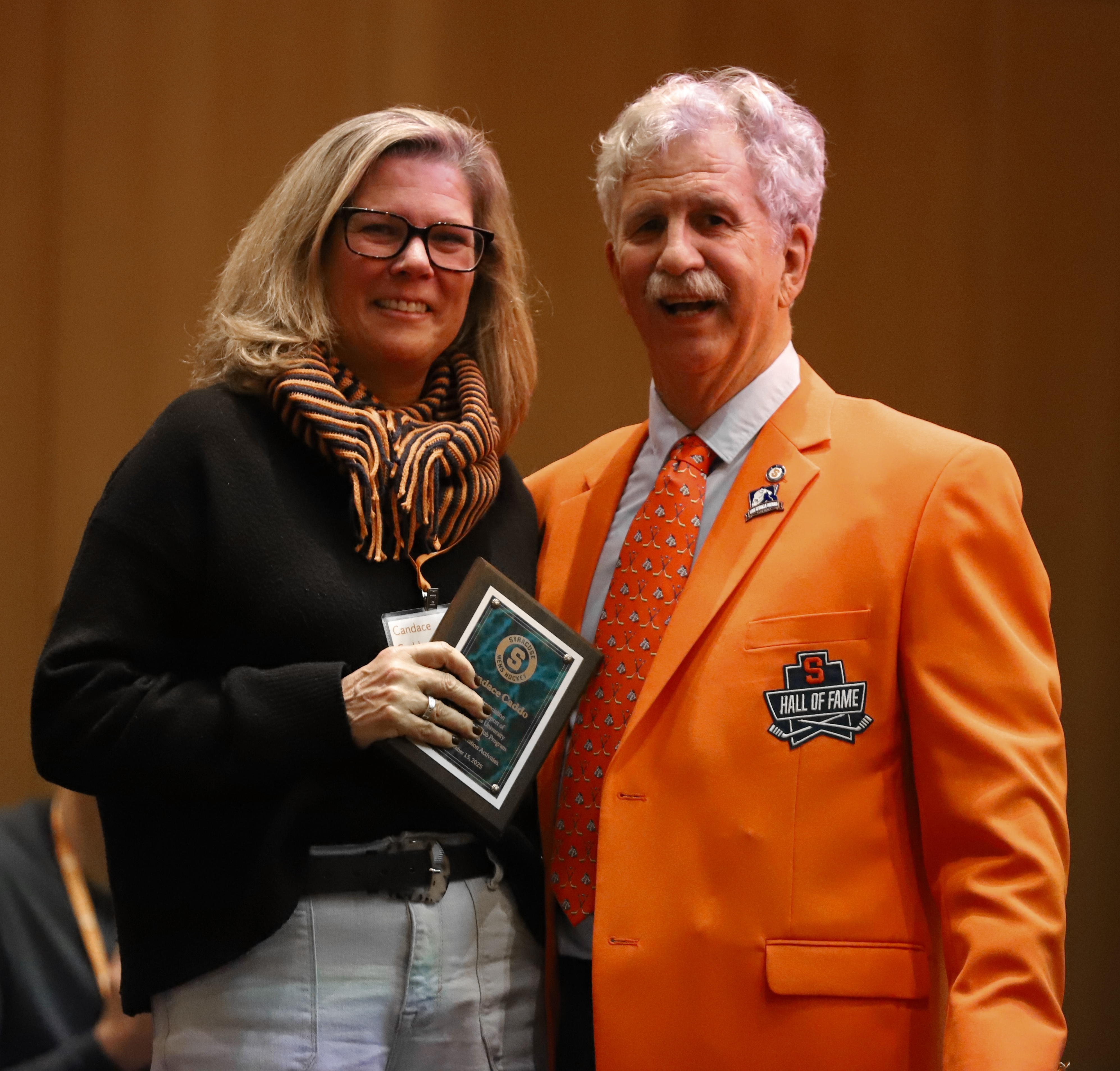
Peter Hayward, (Historian, VWA Recipient 2021) with Candace Caddo in 2025
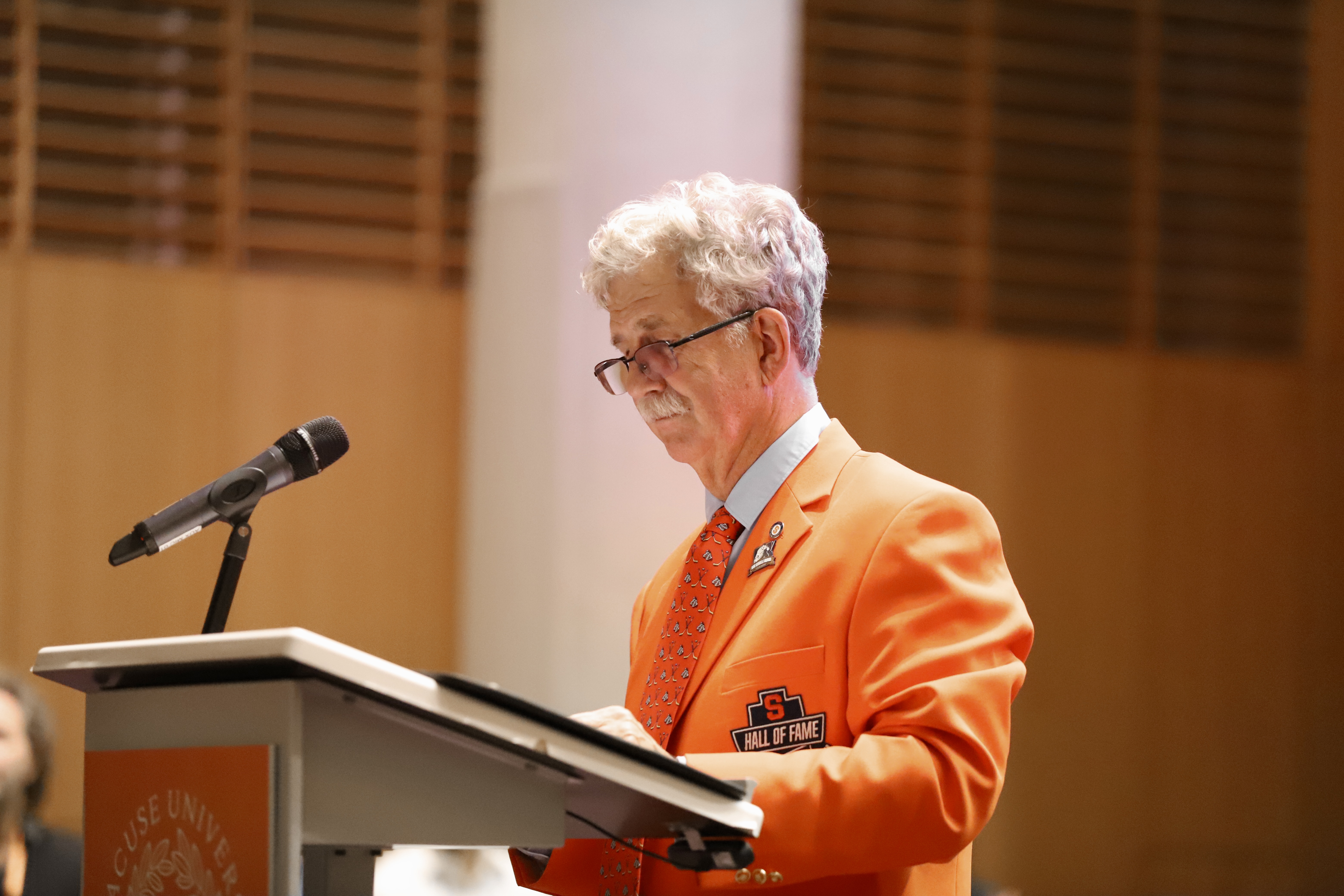
Peter Hayward, Nov 2025 (SUMH Historian, Alumni Awards Weekend Organizer, VWA Recipient 2021)
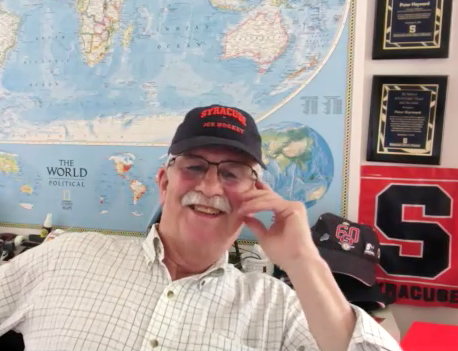
Peter Hayward, 2026 (SUMH Historian, Alumni Awards Weekend Organizer, VWA Recipient 2021)
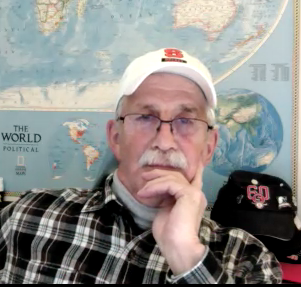
Peter Hayward,23026 (SUMH Historian, Alumni Awards Weekend Organizer, VWA Recipient 2021)
History Project Logo